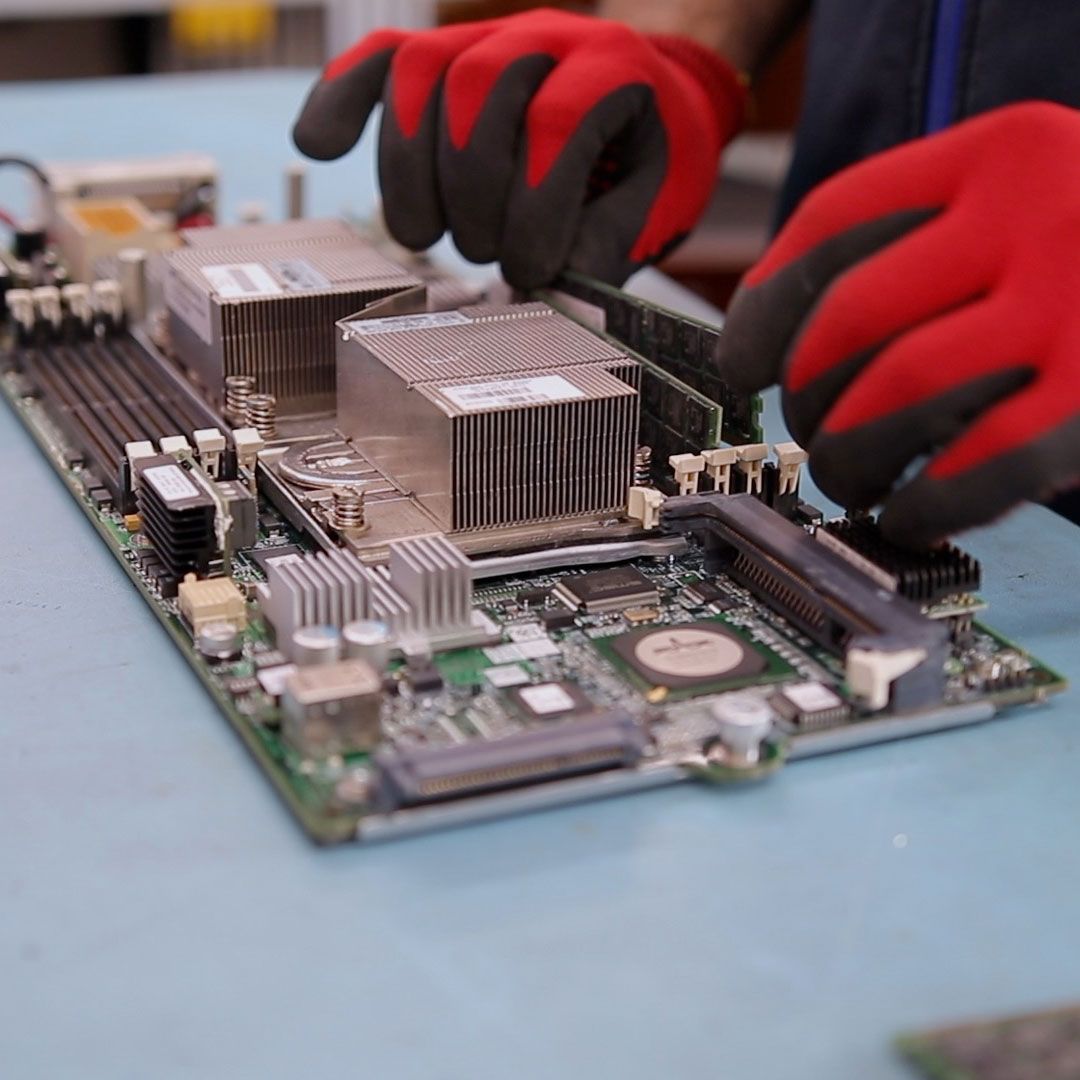
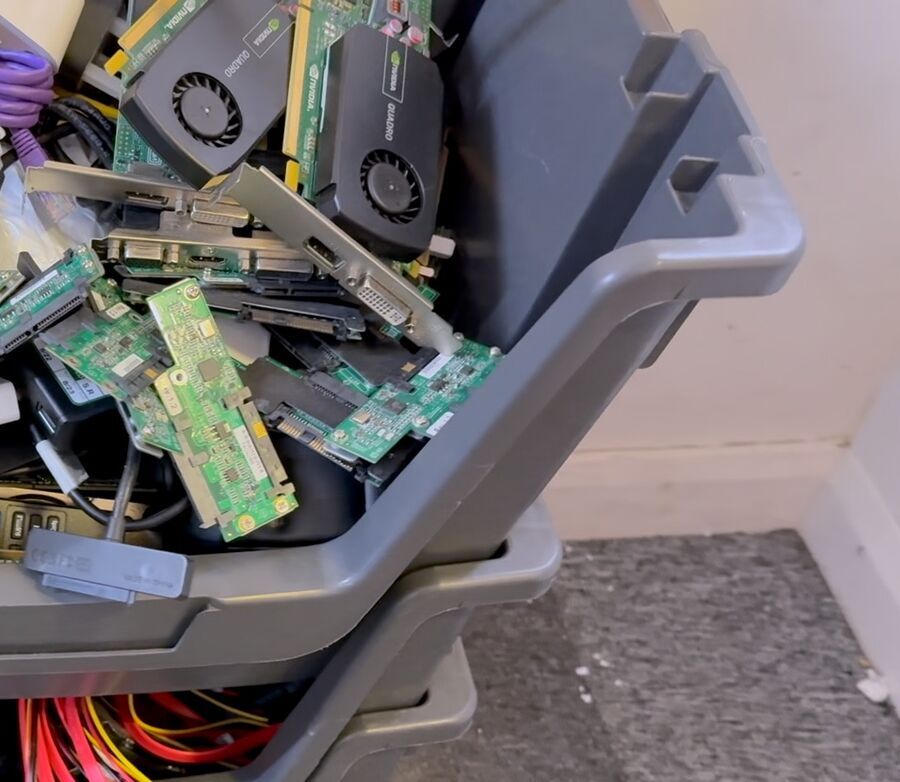
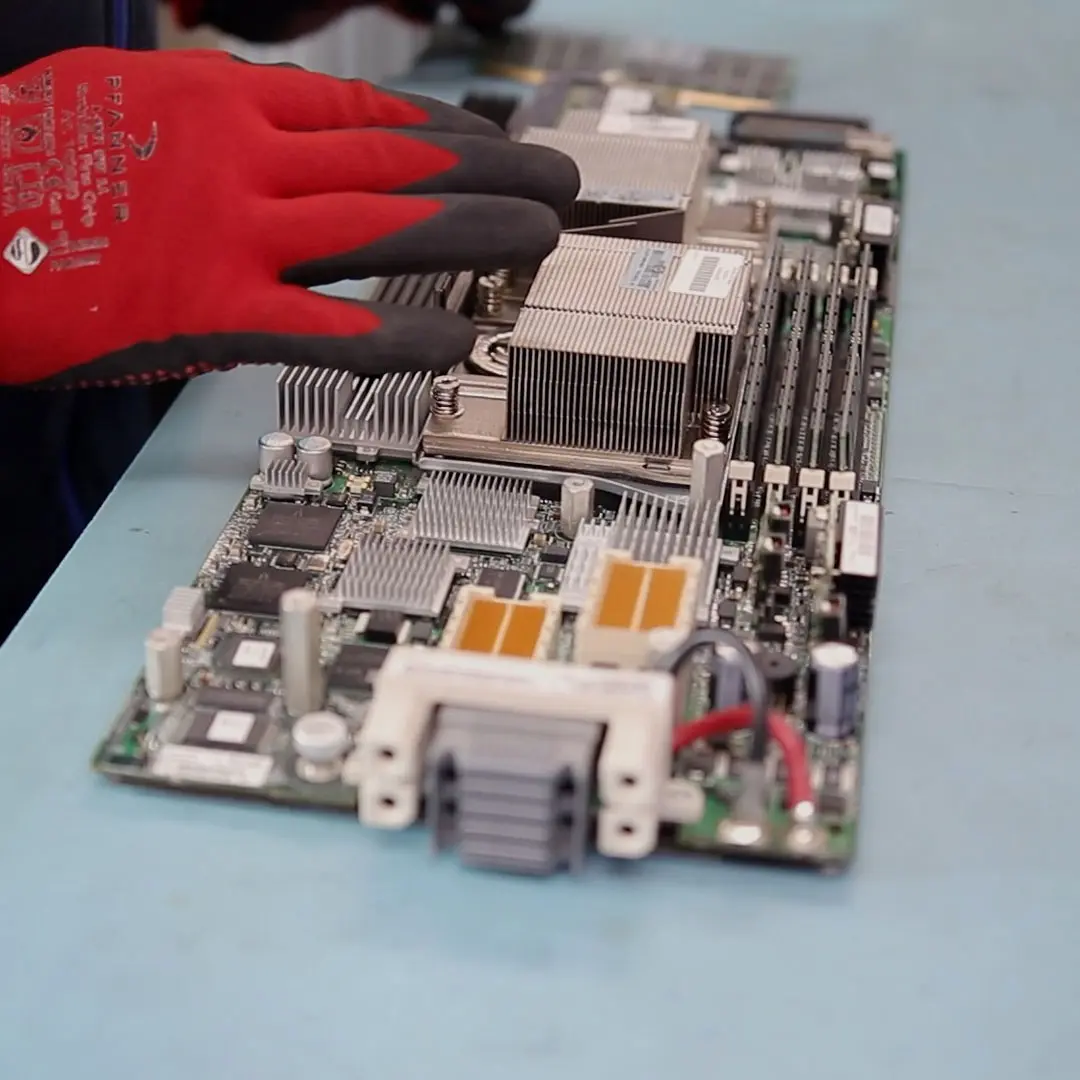
Circuit boards do not go straight to the shredder. We de-solder high-value programmable ICs, microcontrollers and connectors in our soldering lab, releasing them to prototypers and product developers before the board is recycled.
Last reviewed: 22 October 2026


Component recovery is de-soldering high-value programmable ICs, microcontrollers and connectors from circuit boards before the board is recycled for its precious metals — gold, silver and copper.
The same verified foundations on every project — documented, traceable, and UK-only.
Programmable ICs, microcontrollers and connectors are de-soldered before boards are recycled.
De-soldering happens in-house, so components are recovered carefully instead of being lost in the shredder.
Recovered components reach secondary markets where prototypers and product developers can pick them up individually.
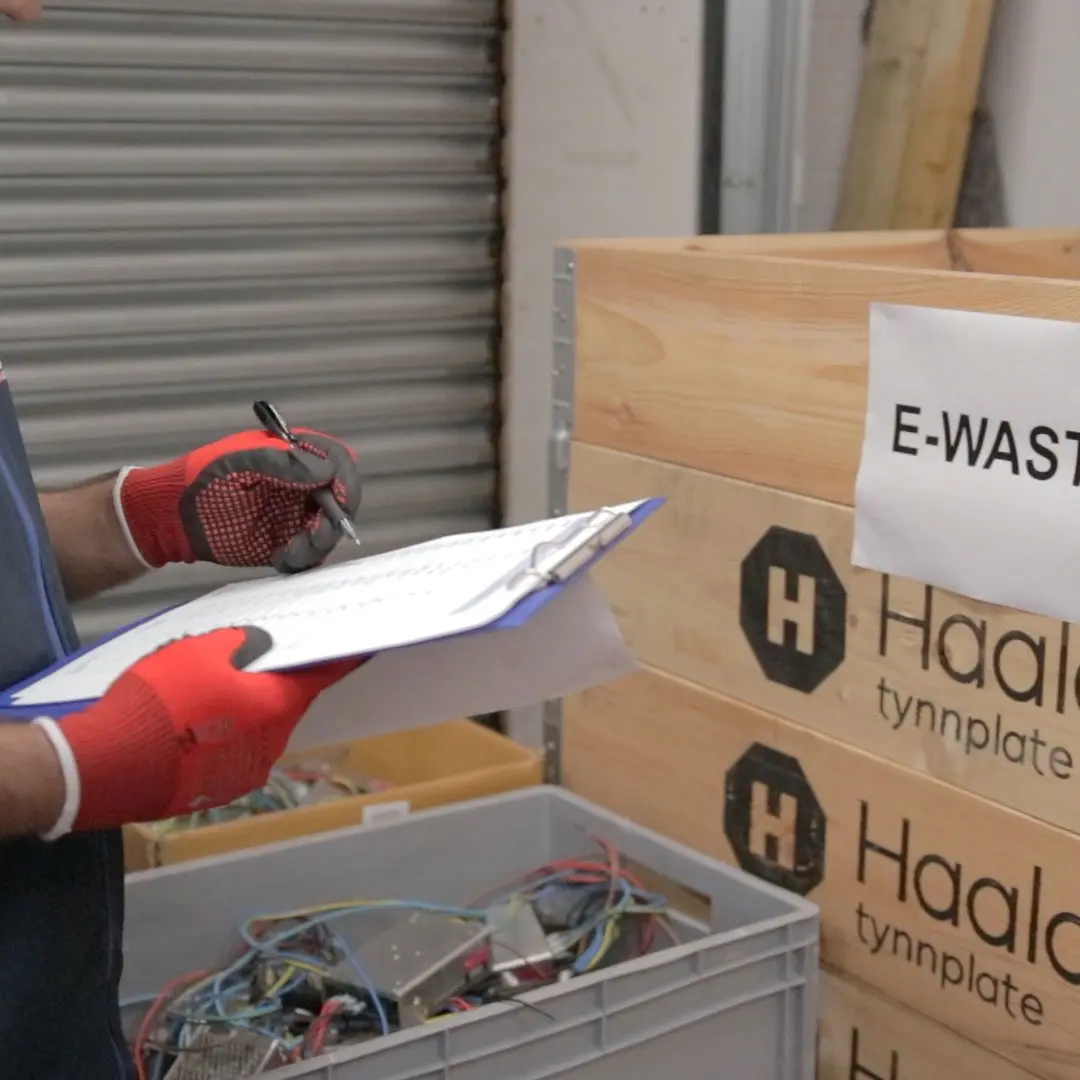
Every asset is logged by serial number, transported under chain of custody by our Environment Agency registered carrier, and processed at our licensed UK facility in Mitcham — never sold on to an untracked offshore broker.
We lead with paperwork, not promises. Every registration below is independently checkable, and every project is delivered against recognised UK standards.
| Credential | Reference | Issued / recognised by | What it proves |
|---|---|---|---|
| Waste Carrier Registration | CBDU656692 | Environment Agency | Legal authority to transport and carry controlled waste and end-of-life IT across the UK. |
| WEEE Treatment Exemption (T11) | EXP/UP3043JD | Environment Agency | Authorised to treat waste electrical and electronic equipment for reuse and recycling. |
| ICO Data Protection Registration | ZB787416 | Information Commissioner's Office | Registered to process personal data in line with UK GDPR and the Data Protection Act 2018. |
| Cyber Essentials | Reference on request | IASME (NCSC scheme) | Independently verified baseline cyber-security controls protecting your data while in our custody. |
| ADR 1.3 Dangerous Goods Awareness (Driver Training) | Reference on request | EcoStar (Dangerous Goods Training Online) | Collection drivers are trained to handle and transport equipment containing lithium batteries (UN3481, Class 9) in line with ADR dangerous goods rules. |
Certification vs alignment: the table lists the registrations and certifications TFix holds and can evidence. References to ISO 27001 elsewhere on this site describe alignment with its information-security principles, not certification.
Standards we work to
We can supply our registrations, insurance certificates, and sample destruction outputs as part of your supplier due diligence.
Built for Prototypers, product developers, makers, and electronics manufacturers.
High-value integrated circuits, microcontrollers and processors recovered for reuse.
Connectors, sockets, relays and power components de-soldered and sorted.
Complete boards and cards set aside whole for component recovery.
Residual boards processed so gold, silver and copper are recovered, not landfilled.
Common questions about circuit boards disposal.
A working programmable IC or connector is worth far more in a circuit than as scrap metal. De-soldering keeps those parts whole and usable, which sits higher up the waste hierarchy than shredding a board for its gold, silver and copper.
Recovered parts go to secondary markets where prototypers, makers and product developers can pick them up individually — components that would otherwise be too expensive one-off or only sold in bulk.
After the valuable parts are recovered, the remaining board is processed so its precious metals — gold, silver and copper — are recovered rather than landfilled.
Still deciding?
Tell us about the circuit boards you need to retire and we will arrange a clear, no-obligation quote.