Every term on this page is the same definition TFix uses in contracts, certificates and reporting. If a term links somewhere, that link is the service or reference page where the term matters most.
The definitions below also power the structured glossary data used by search engines and AI assistants.
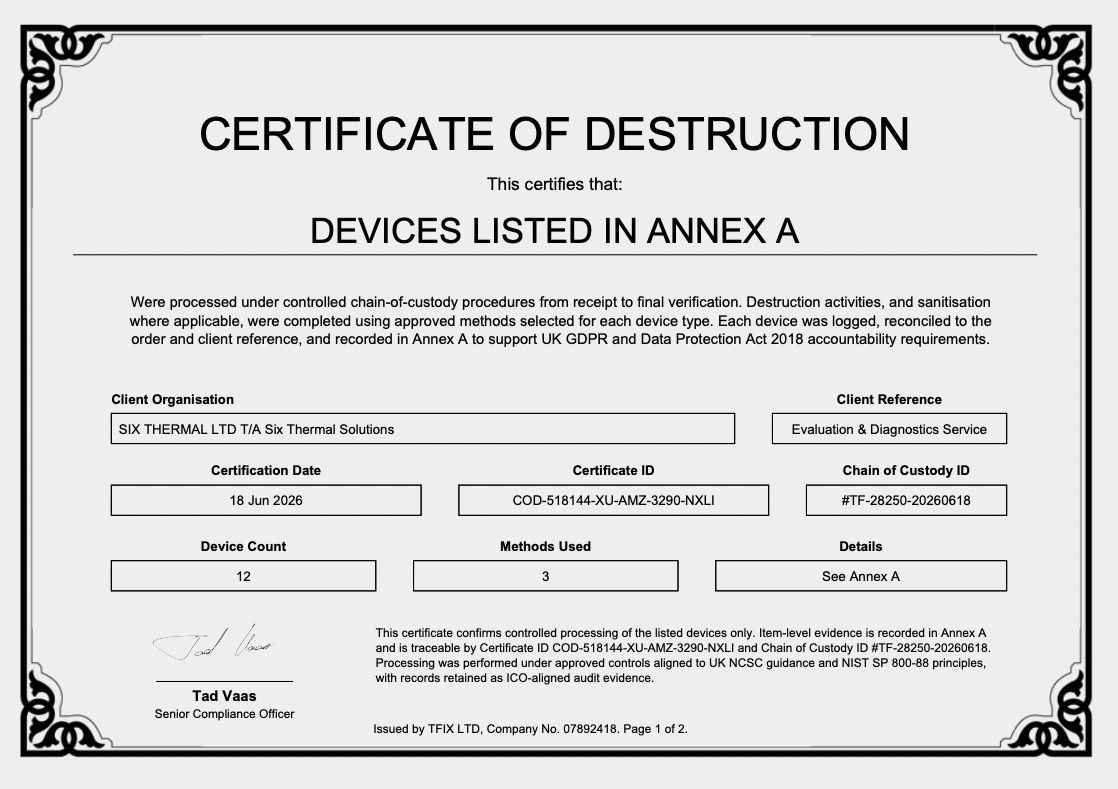
CoD
Certificate of Destruction
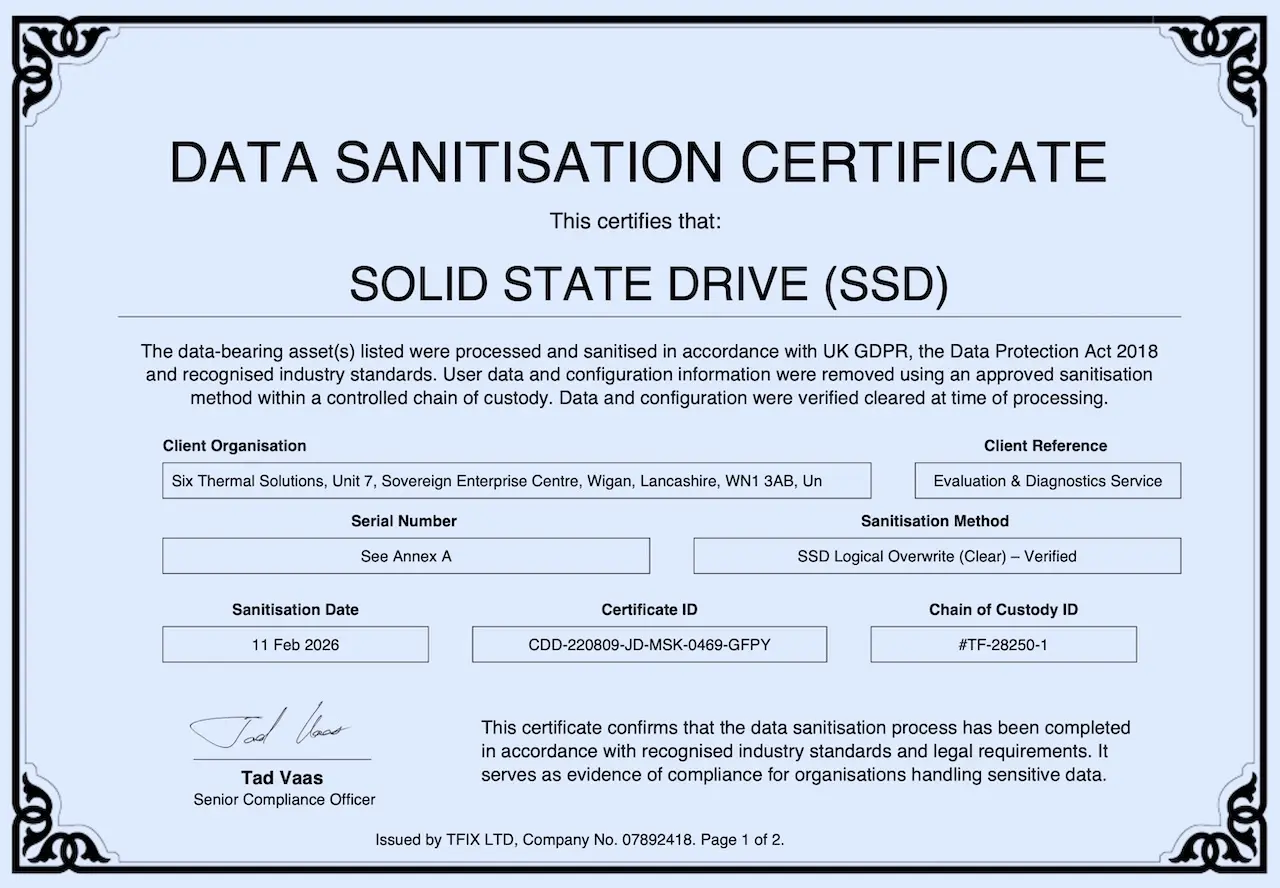
A serialised audit document issued per device or per order, recording serial numbers, the sanitisation method applied, and an authorised sign-off.
Learn more →IT Asset Disposition
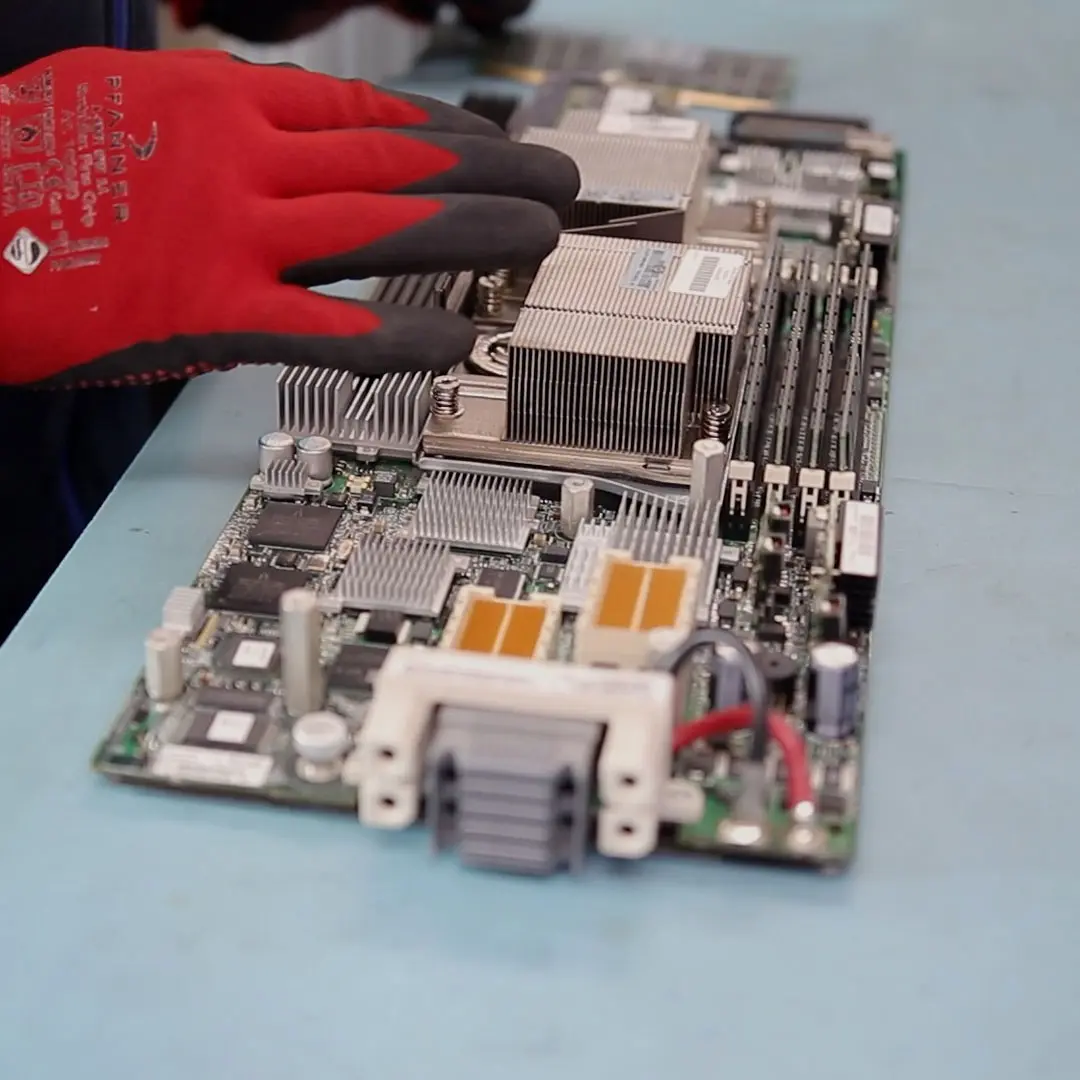
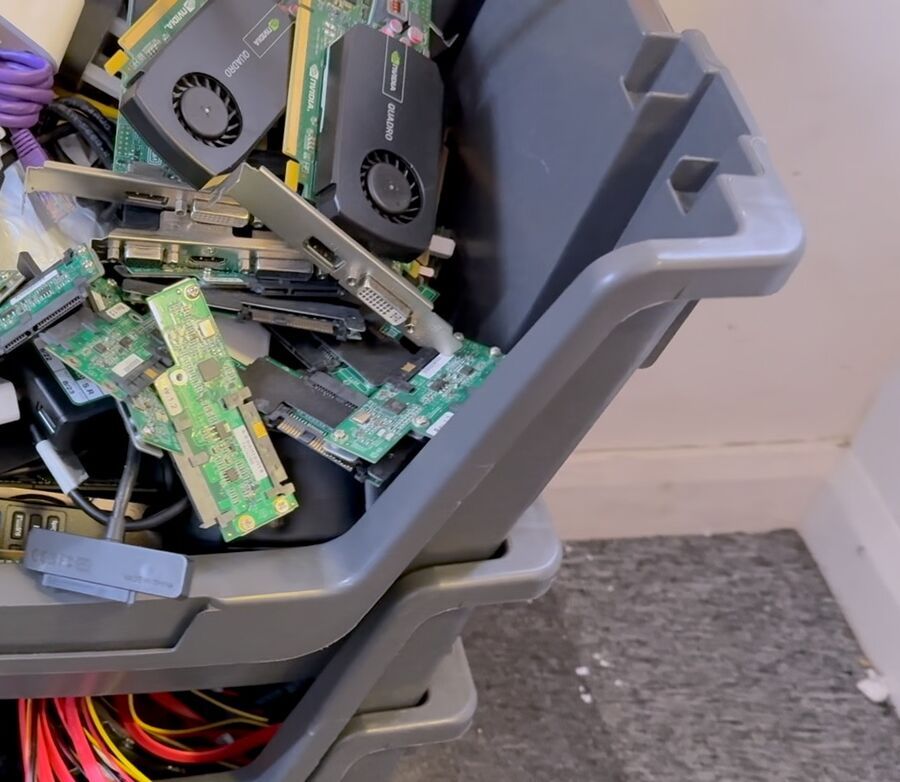
The secure, documented retirement of end-of-life business IT: certified data destruction, decommissioning, and then either resale/value recovery or WEEE recycling of the hardware, on a serialised chain of custody.
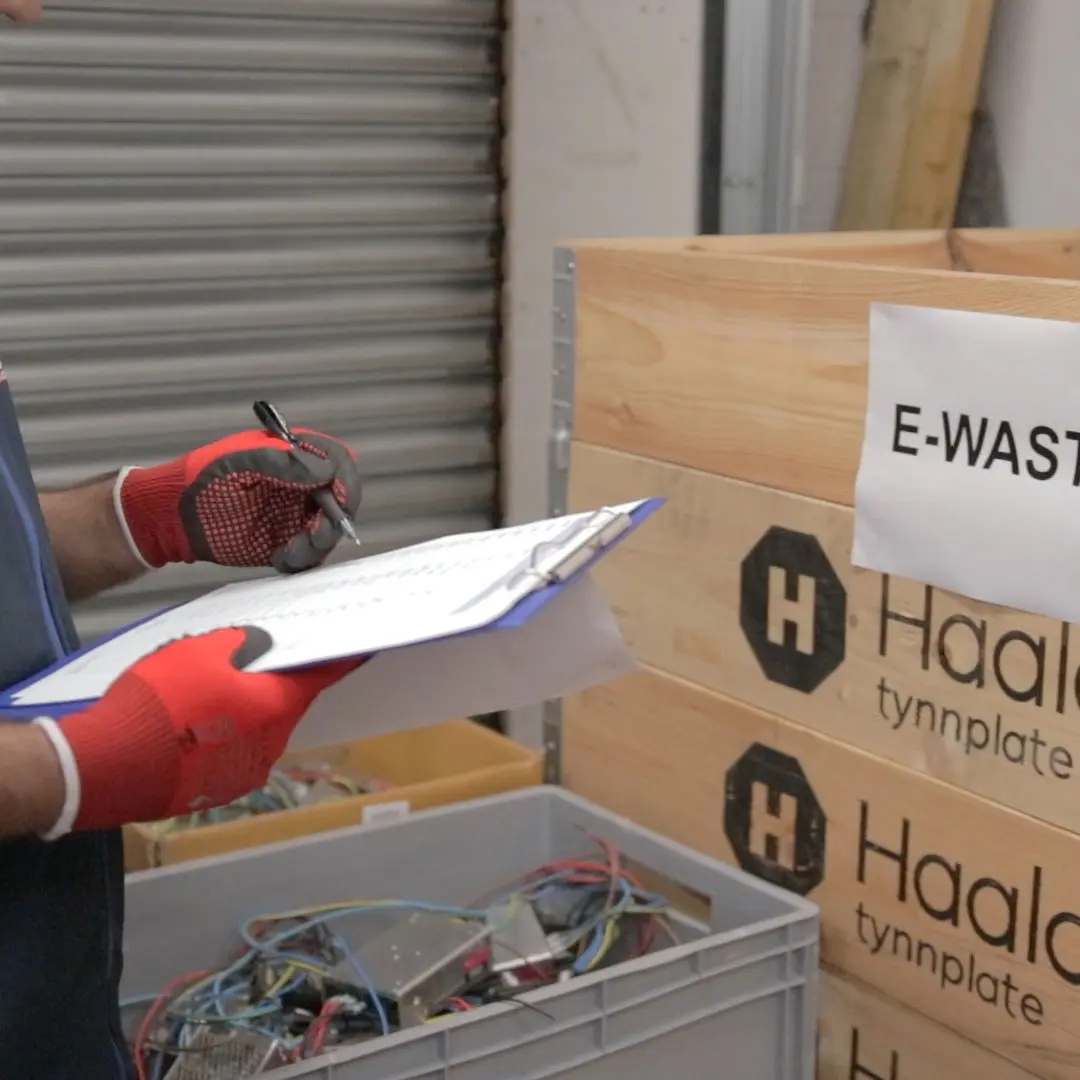
Waste Electrical and Electronic Equipment
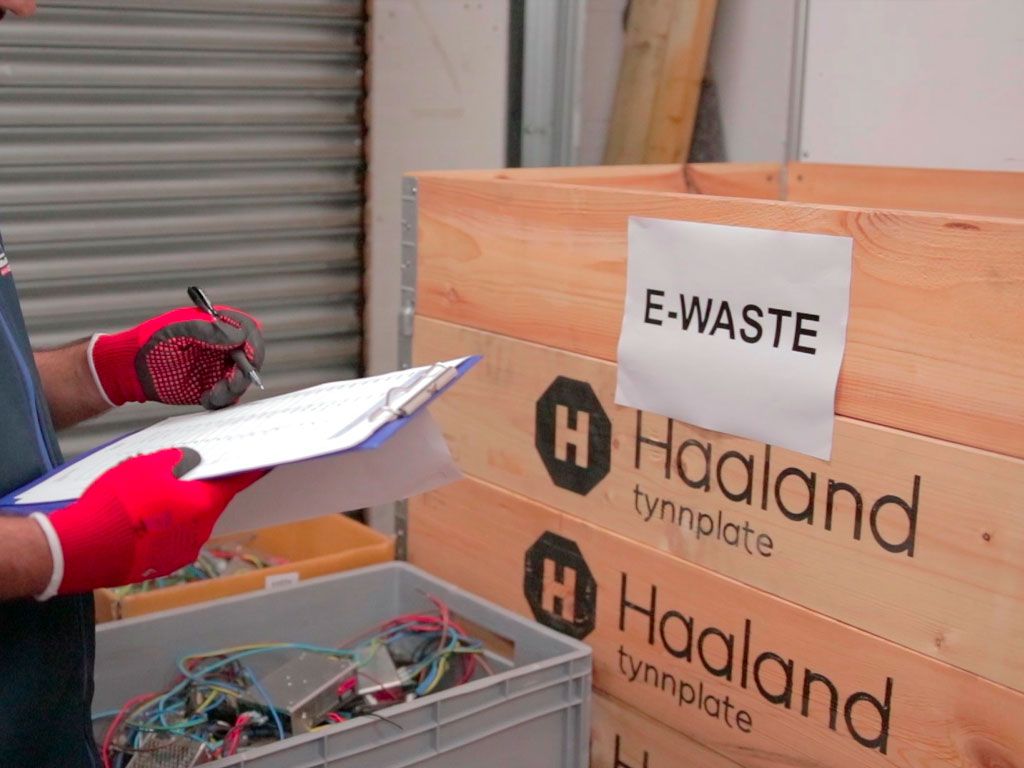
The UK regulatory category covering end-of-life electricals and electronics, governed by the WEEE Regulations 2013. WEEE must be handled by licensed operators and tracked with a Waste Transfer Note.
Learn more →
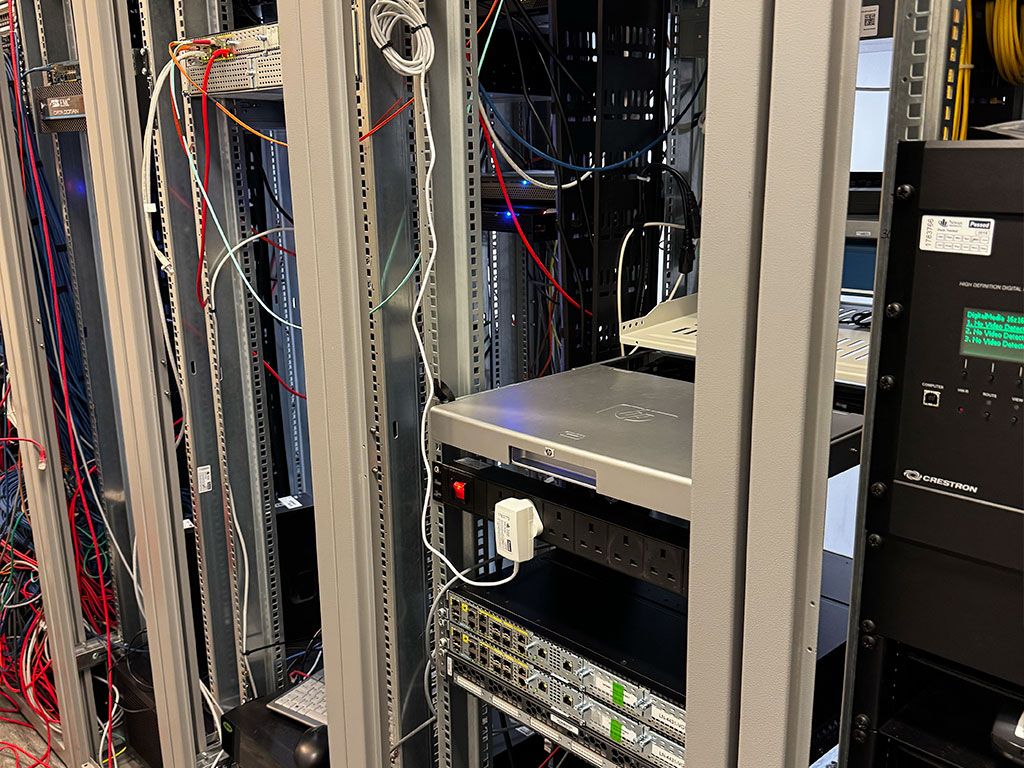
IT Decommissioning & De-racking
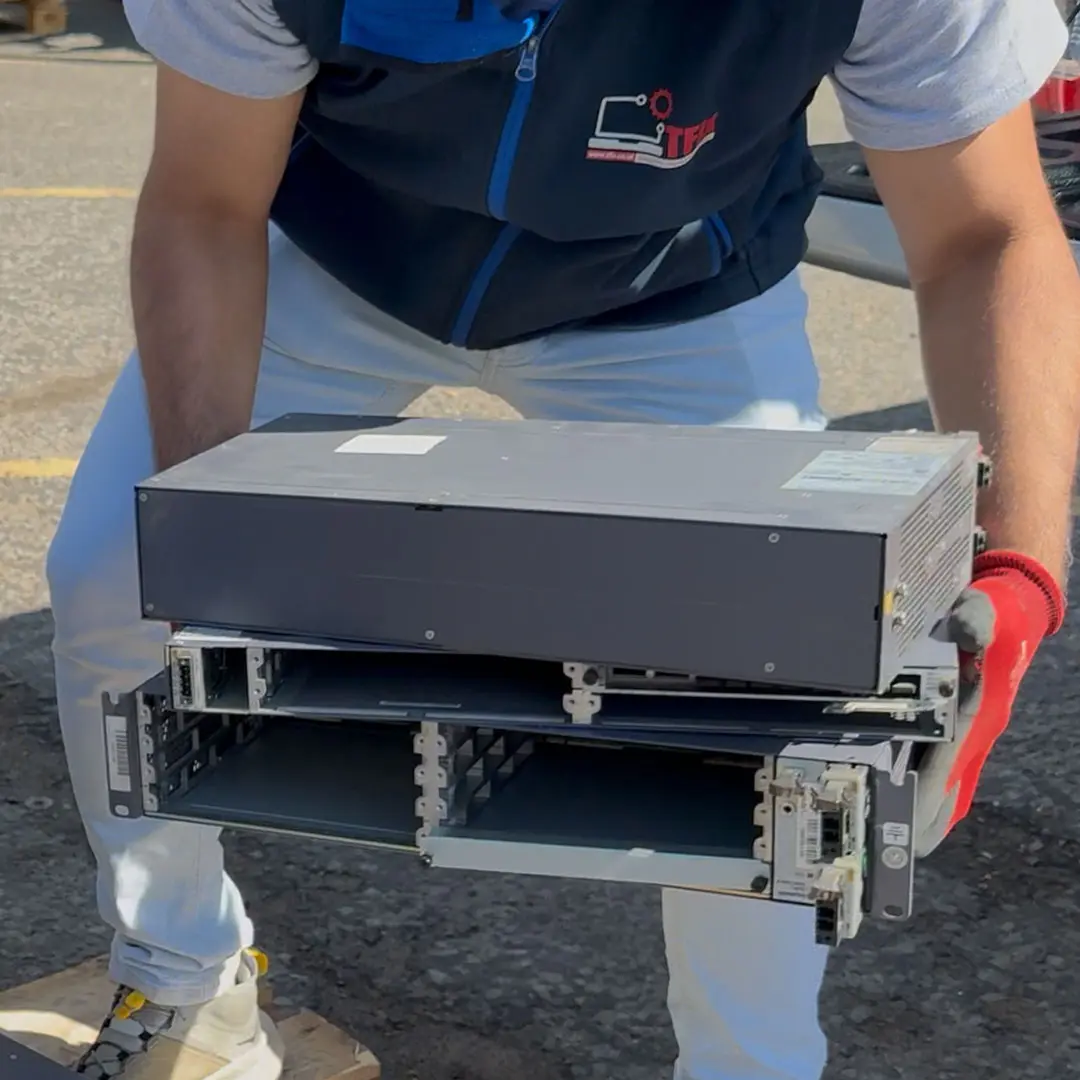
The controlled power-down, disconnection and removal of IT equipment from offices, server rooms and data centres, ahead of data destruction and disposal or recovery.
Learn more →
Asset Recovery & Buyback
The resale, refurbishment or repurposing of decommissioned assets to return residual value to the owner, after data has been sanitised and devices de-branded.
Learn more →
R-Grade Condition System
A cosmetic and functional grading scale for refurbished assets ahead of resale, from R-A (excellent) down to R-D (heavy wear), used to set resale condition and pricing fairly.
Learn more →NIST SP 800-88 groups media sanitisation into three escalating categories.
Clear (Logical Sanitisation)
The NIST 800-88 method that applies logical overwrite techniques to sanitise user-addressable storage, protecting against standard software recovery while keeping the media intact and reusable.
Drive stays reusable
Purge (Secure Erase)
The NIST 800-88 method that uses physical or logical techniques — such as ATA Secure Erase, NVMe Sanitize, or cryptographic erasure — making data recovery infeasible even to state-of-the-art laboratory techniques.
Drive stays reusable
Destroy (Physical Destruction)
The NIST 800-88 method that physically destroys media — shredding, crushing or disintegration — rendering it unusable and the data unrecoverable. Shredding in the UK is typically to BS EN 15713 particle size.
Media rendered unusableThe one rule that matters
A device is only “sanitised” if the method can be verified. If erasure cannot be confirmed, the device is physically destroyed. See the full NIST SP 800-88 explainer for the decision table.
The US National Institute of Standards and Technology guideline for media sanitisation, defining the three sanitisation categories Clear, Purge and Destroy. Widely referenced as the benchmark for certifiable data destruction.
Learn more →Any process — Clear, Purge or Destroy — that renders target data unrecoverable from storage media to the required assurance level.
Learn more →Erasure overwrites data so a drive can be safely reused or resold; destruction physically breaks the media so it cannot be used again. Erasure preserves value, destruction provides the highest assurance for failed or high-risk media.
Learn more →Erasure using a strong magnetic field. Effective only on magnetic media such as HDDs and tape; it has no effect on SSDs, NVMe or flash storage, so it is not a standalone method for modern mixed estates.
Learn more →The British Standard for the secure destruction of confidential material, including the maximum particle size for shredded media and chain-of-custody requirements.
Learn more →
The audit trail
Certificates of Destruction, Waste Transfer Notes and consignment notes — plus a verified tScrub erasure report per drive — the documents that prove every device was handled properly.
Download a sample Certificate of Destruction to see the full layout.
Certificate of Destruction (CoD)
A serialised audit document issued per device or per order recording the serial numbers, the sanitisation method applied, and an authorised sign-off — the core evidence for GDPR, NIST 800-88 and BS EN 15713 compliance.
Learn more →Certificate of Erasure / Sanitisation
The same audit document class as a Certificate of Destruction, issued when media is wiped and kept intact rather than physically destroyed.
Learn more →Chain of Custody (CoC)
The documented, serialised trail of who handled equipment and when, from collection through processing to final disposition, proving equipment never left controlled custody.
Learn more →Waste Transfer Note (WTN)
The legally required document recording the transfer of waste between parties, required under the Duty of Care in the Environmental Protection Act 1990. Issued with every TFix collection.
Learn more →Hazardous Waste Consignment Note (HWCN)
The consignment note required for hazardous waste such as certain batteries and WEEE fractions, pre-notified to the Environment Agency and tracked through to final treatment.
Learn more →European Waste Catalogue Code
The six-digit European Waste Catalogue code classifying waste types, recorded on transfer and consignment notes so waste is described and tracked consistently.
Learn more →Digital Waste Tracking
The UK Environment Agency's move from paper waste records to a digital record of every waste movement under the Environment Act 2021, consolidating Waste Transfer Notes and consignment notes over time.
Learn more →
ADR (Dangerous Goods by Road)
The European agreement governing the transport of dangerous goods by road, including the packaging, labelling and driver training required to carry equipment containing lithium batteries (UN3481, Class 9).
Learn more →
WEEE Treatment Exemption (T11)
An Environment Agency waste exemption authorising a site to treat waste electrical and electronic equipment for reuse and recycling without a full environmental permit.
Learn more →Every project applies these terms in practice — NIST 800-88 erasure or BS EN 15713 shredding, serialised certificates, and chain-of-custody documentation on a UK chain of custody.