ITAD Partnerships for Office Removal Companies

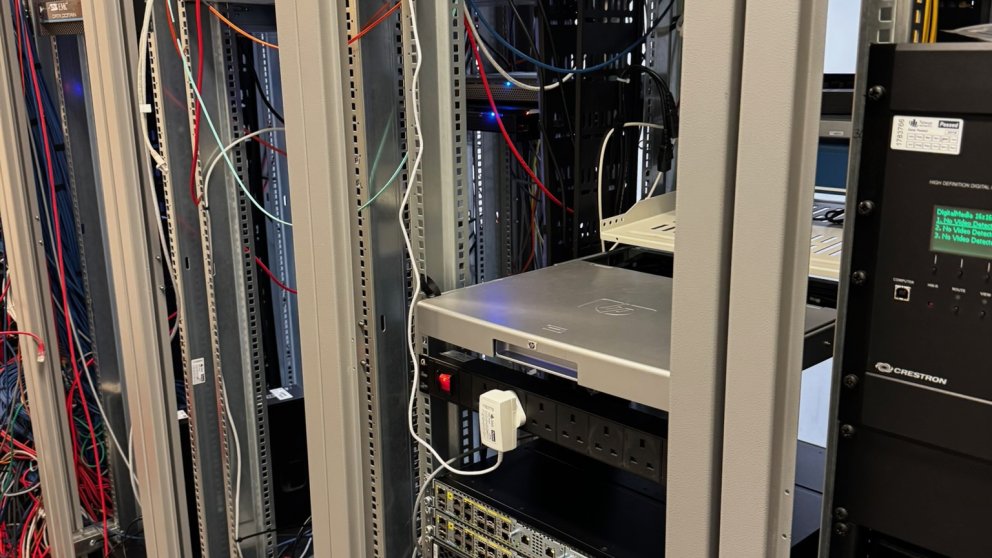
Commercial office moves are rarely just about desks, chairs and filing cabinets. Behind the furniture, there may be servers, laptops, switches, storage devices, monitors and kilometres of cabling. When a client asks a removal company to take responsibility for that equipment, the project becomes a data security, asset management and WEEE compliance issue as well as a logistics exercise.
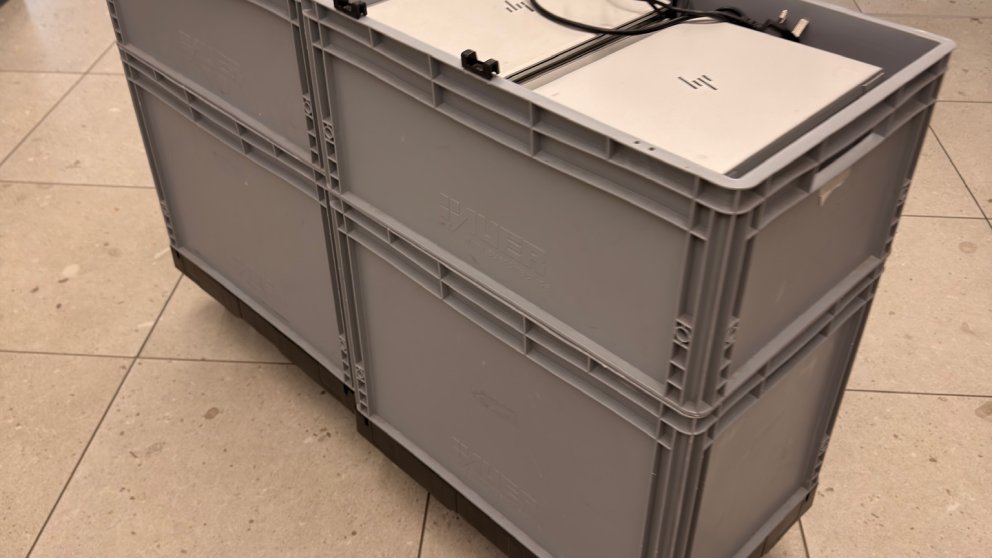
For removal companies, refusing this part of the work can mean losing useful revenue and making the client coordinate several suppliers. Accepting it without the right processes can expose both businesses to avoidable technical and regulatory risk. Working with a specialist IT Asset Disposal (ITAD) partner provides a practical middle ground: one coordinated office relocation service, with the IT disposal handled securely and documented properly.
Why IT equipment creates extra responsibility
Legacy technology is not ordinary waste. A laptop may contain personal data, a server can hold business-critical information, and a storage array may include multiple drives that are easy to overlook during a fast-moving relocation. Even equipment that appears old or unusable may still contain recoverable data.
There is also a clear difference between moving equipment and disposing of it. If assets are being retired, the process should account for their condition, data-bearing components, ownership and final destination. Electrical and electronic equipment must also be managed through appropriate WEEE recycling routes where reuse or recovery is not possible.
Our role is to help removal companies separate these responsibilities from the general move. We can assess the equipment, identify data-bearing assets, arrange secure data erasure or destruction, and ensure that unsuitable hardware enters responsible recycling streams.
What an ITAD partner adds to a removals project
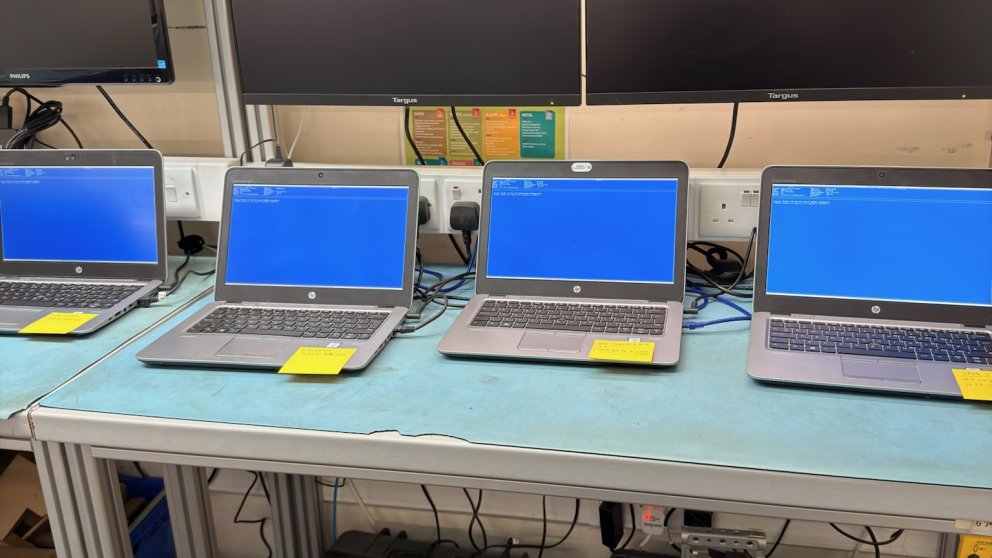
A specialist ITAD service complements the removal company’s existing strengths. The removal team can focus on planning, packing, transport and customer communication, while we manage the technical treatment of the technology.
Depending on the project, this may include:
- Server rack decommissioning and removal of associated equipment
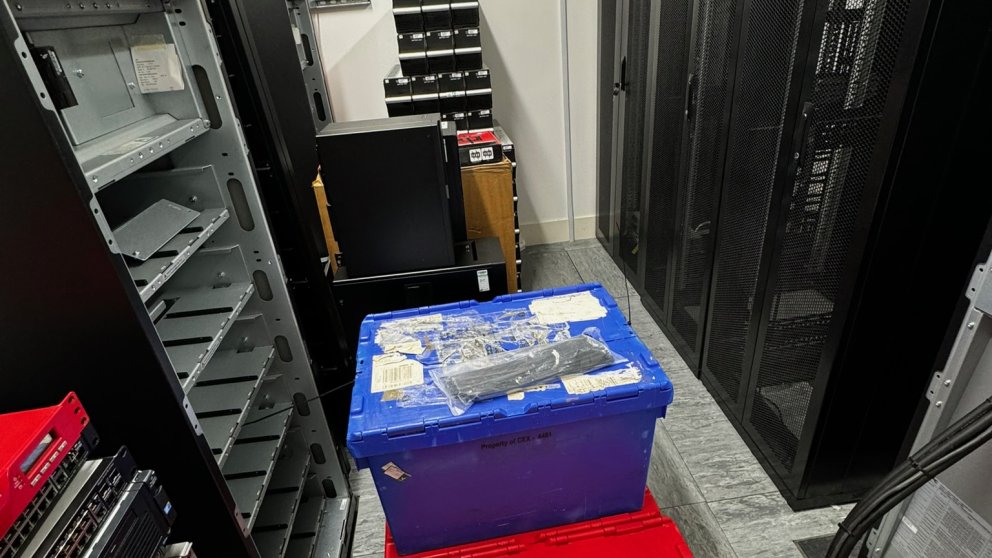
- Identification and tracking of laptops, desktops, servers, drives and networking hardware
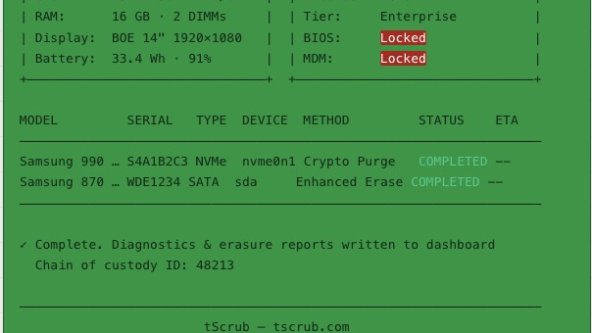
- Secure data erasure or physical destruction, based on the asset and the client’s requirements
- Testing and grading equipment for reuse, refurbishment or parts recovery
- Responsible WEEE recycling for equipment that cannot be reused
- Asset reports and supporting compliance documentation
This joined-up approach reduces handovers and gives the client a clearer audit trail from collection through to final disposition.
Protecting clients with clear documentation
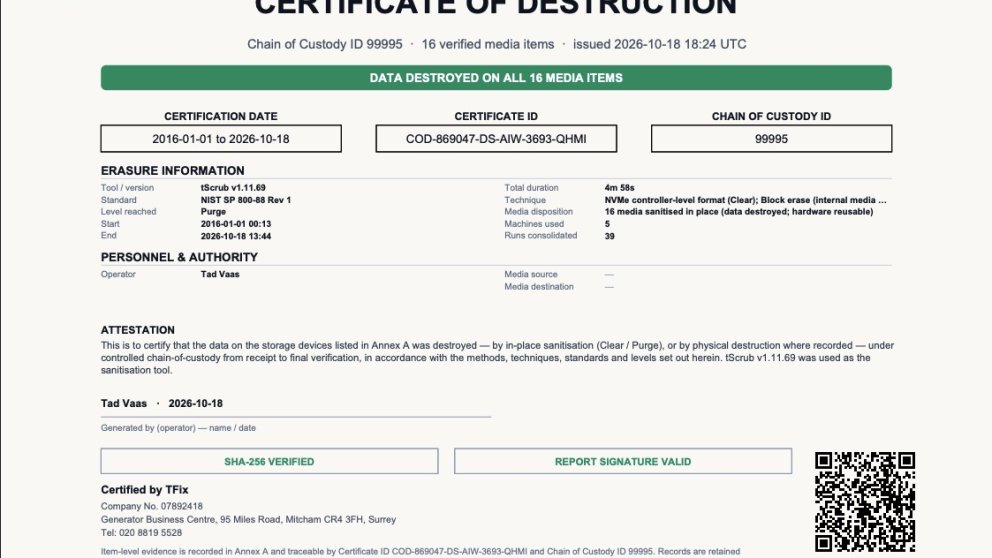
Good documentation is one of the most important parts of an IT disposal project. Clients may need to demonstrate that their information was handled appropriately and that unwanted electrical equipment was transferred through a suitable waste process.
We can provide records that support the project, including asset inventories, data erasure evidence, Certificates of Destruction where physical destruction has taken place, and Waste Transfer Notes for relevant waste movements. These documents serve different purposes, so the correct paperwork should match the treatment each asset received.
Serial numbers and item-level records are particularly valuable. They help connect the equipment collected from the client with the action taken afterwards, rather than relying on a general statement that “the IT was wiped”.
Turning retired equipment into recovered value
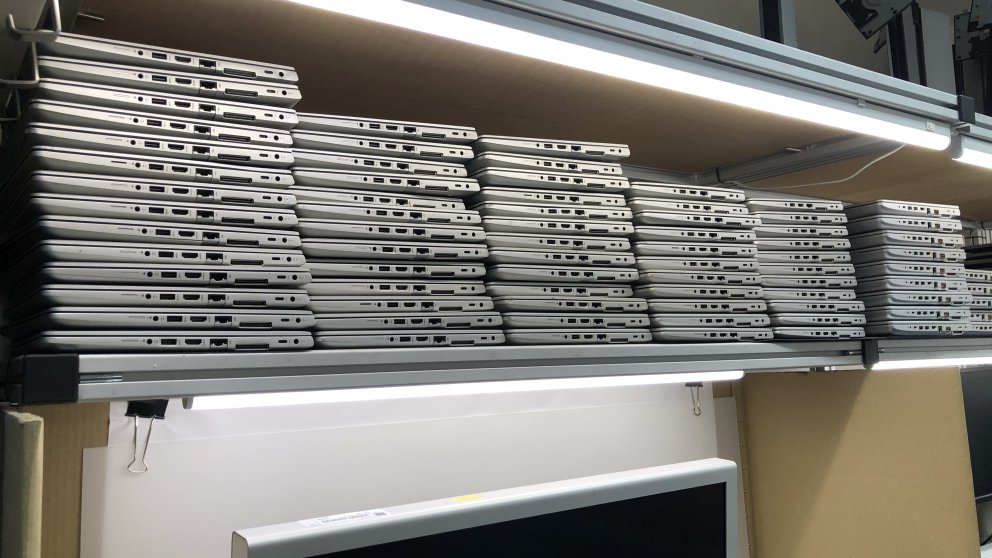
Not every device removed during an office move should be sent straight for recycling. Some equipment may be suitable for reuse, refurbishment or parts recovery. Assessing assets before disposal can help preserve their remaining value and reduce unnecessary waste.
We examine the condition and suitability of equipment, while keeping data security central to the process. Where assets have a viable second life, recovery can be considered after the required data treatment. Items that are obsolete, damaged or uneconomical to process are directed into appropriate recycling channels, allowing materials such as metals and components to be recovered where possible.
A smoother service for removal companies and their clients
An ITAD partnership can make the removal company’s proposal more complete without requiring its team to build an in-house data destruction or recycling operation. It can also make responsibilities clearer at the planning stage: which equipment is being moved, which is being reused, which requires secure erasure, and which is waste.
For the client, this means fewer suppliers to coordinate and a more consistent chain of custody. For the removal company, it means being able to offer a wider office relocation service while referring specialist technical work to an experienced partner.
Office moves are a natural point to review old technology, remove unnecessary risk and recover value from assets that are no longer needed. By partnering with us for IT recycling and data erasure, commercial removal companies can provide a more complete service, supported by traceable records and responsible end-of-life handling. Get in touch to learn more about our ITAD, secure data destruction and WEEE recycling services.
Ready to act on this?
Book a free ITAD assessment, compare your destruction options, or review provider-selection guidance before choosing a partner.
Need help with this in your organisation?
Book the matching service directly based on this article topic.