How to Accurately Estimate IT Asset Disposal Costs and Value Recovery

Estimating the financial and compliance footprint of an IT Asset Disposition (ITAD) project requires moving past ballpark guesses to transparent, published rates. To budget accurately for an upcoming IT refresh or office clearance, organizations must evaluate asset counts, compliance reporting requirements, data destruction needs, and potential resale value offsets.
Calculating the cost of IT disposal relies on fixed logistics models, individual drive destruction fees, and asset age and condition parameters to project realistic total costs alongside potential value recovery.
1. Inventory Volume and Logistics Requirements
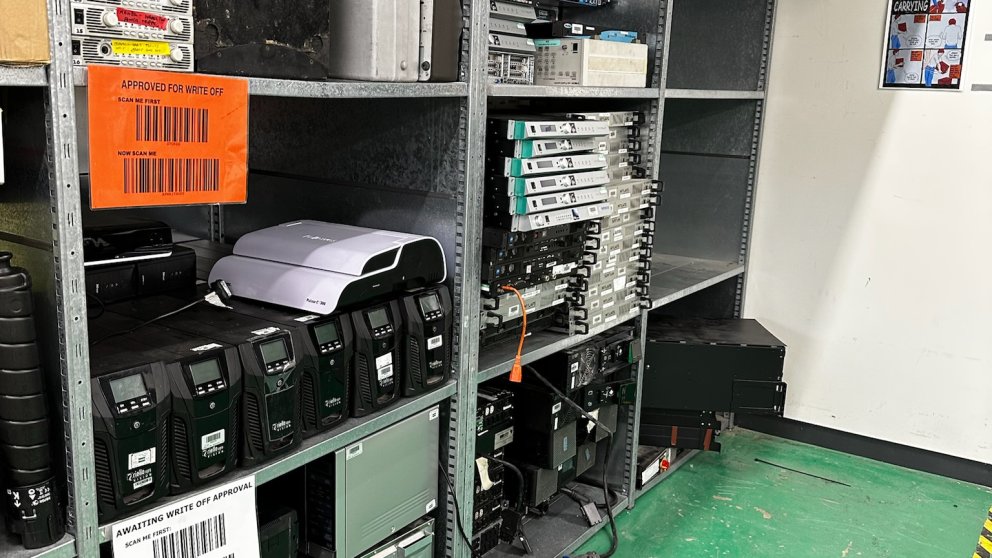
The primary driver of IT disposal costs is the physical scope of the equipment. A comprehensive collection estimate accounts for the total volume of hardware, including:
-
Laptops, desktops, and workstations
-
Servers and rack equipment
-
Monitors and display units
-
Mobile phones and tablets
-
Printers, networking gear, and loose hard drives
Because items containing lithium-ion batteries—such as laptops, phones, and tablets—are classified as dangerous goods, collections must be handled via ADR-compliant logistics. Freight volume dictates whether a project requires a single van collection or multiple vehicle runs. Published commercial rates offer a clear baseline, with WEEE collection starting from £250 per van.
2. Compliance Reporting and Data Destruction
A robust ITAD process requires complete administrative oversight and full chain-of-custody documentation. Standard processing yields several vital compliance reports:
-
Serialized Inventory Reports: Every collected unit is logged with individual asset serial numbers for complete auditing.
-
Waste Documentation: Depending on the nature of the assets, either a standard Waste Transfer Note or a Hazardous Waste Consignment Note (for dangerous goods such as batteries) is issued.
-
Certificates of Destruction: Hard drives and media are processed according to NCSC secure sanitisation guidance and NIST 800-88 standards. Published costs for drive destruction run at £10 per drive or £495 per batch of 100 drives.
-
End-of-Waste & Environmental Metrics: Comprehensive reporting details the percentage of waste diverted from landfill alongside carbon saving metrics (kg CO2e) and water savings.
3. Estimating Value Recovery Offsets
ITAD pricing is not strictly an expense; hardware in good condition retains market value that offsets processing costs.
Value recovery depends heavily on two variables:
-
Average Asset Age: Newer hardware yields significantly higher resale margins.
-
Asset Condition: Equipment that is functional and cosmetically sound commands higher market pricing for refurbishing.
When processing equipment, potential resale value is calculated and credited back to the organisation as a rebate, offsetting logistics and media sanitisation fees.
Frequently Asked Questions
What is the difference between a Waste Transfer Note and a Hazardous Waste Consignment Note?
A Waste Transfer Note is used for standard non-hazardous WEEE. If the shipment contains hazardous components—such as lithium-ion batteries found in laptops or mobile devices—a Hazardous Waste Consignment Note is legally required to document dangerous goods transport under ADR regulations.
How is asset data destruction verified?
Data destruction is performed following NIST 800-88 and NCSC secure sanitisation guidance. Once completed, you receive itemised Certificates of Destruction tied directly to the serialized inventory report.
How does asset age affect IT disposal pricing?
Older equipment generally incurs processing costs with limited resale market value. Newer hardware (typically under 3–4 years old) generates asset recovery rebates that can partially or fully offset collection and destruction fees.
Ready to act on this?
Book a free ITAD assessment, compare your destruction options, or review provider-selection guidance before choosing a partner.
Need help with this in your organisation?
Book the matching service directly based on this article topic.