The Ultimate Guide to SSD PSID Unlocking: Recovering "Bricked" Enterprise Storage

The Failure of Standard Formatting
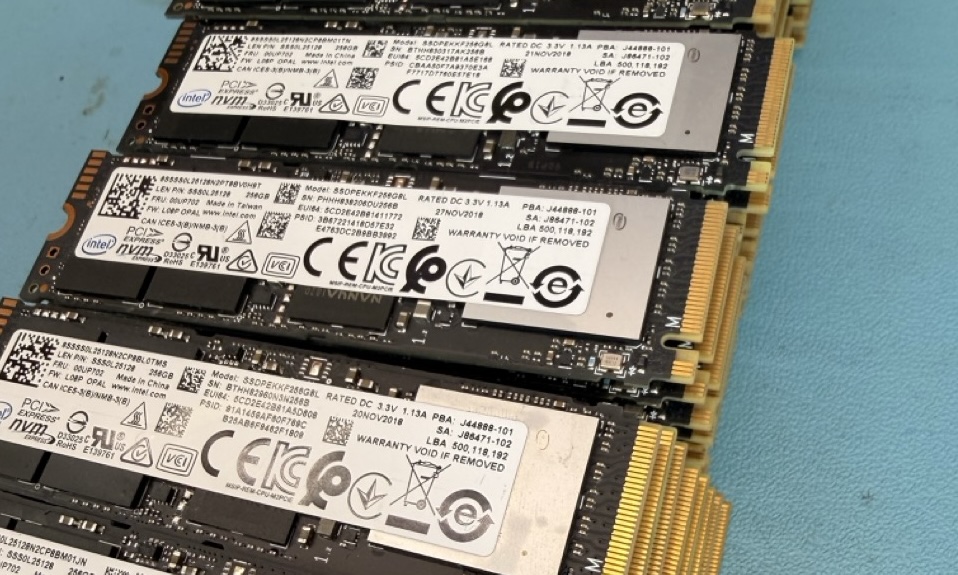
Most IT professionals reach for tools like Parted Magic or standard BIOS "Secure Erase" features when decommissioned SSDs are found to be write-protected. However, if a drive is TCG OPAL 2.0 compliant and has a hardware-level lock, these software-level tools will fail. This is because the drive's controller has locked the Media Encryption Key (MEK). To restore functionality, you must communicate with the firmware via the Physical Security ID (PSID).
Technical Troubleshooting: Why sedutil-cli Often Fails
Even with the correct 32-character PSID, the recovery process is rarely a single-step success. Common technical roadblocks include:
| Error Message | Likely Cause | Solution |
| "Method Failed" | Drive is in a 'frozen' security state by the BIOS. | Perform a 'hot-plug' or cold boot to unfreeze the registers. |
| "Invalid PSID" | Manual entry error or incorrect character mapping. | Use a barcode scanner to ensure 100% accuracy of the 32-digit string. |
| "NOT_AUTHORIZED" | The TPer (Trusted Peripheral) is already in a reverted state or restricted. | Verify OPAL support using sedutil-cli --scan. |
The NIST 800-88r2 Compliance Factor
Unlocking a drive is an act of asset recovery, but in an ITAD context, it must be paired with sanitisation. The revertTPer command triggers a Cryptographic Erase (CE). According to NIST 800-88r2, this is classified as a "Purge" for most modern SSDs. It renders all previous data unrecoverable by destroying the internal encryption keys, making it a superior method to simple overwriting, which can miss data hidden in over-provisioned areas of the NAND.
Strategic Recovery: A Success-Based Model
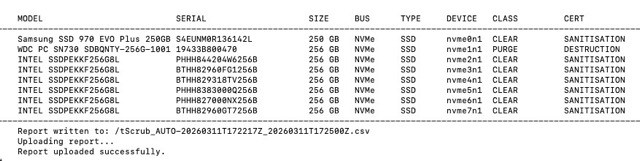
For organisations managing hundreds of units, manual unlocking is an operational bottleneck. TFix utilises a proprietary automated workflow to process large batches with a 95%+ success rate. This converts what would have been "e-waste scrap" (valued by weight) into "Grade-A Refurbished Stock" (valued by capacity).
Frequently Asked Questions
-
Does PSID unlocking damage the drive?
No. It is a firmware-level factory reset. It clears the security credentials and data but does not impact the health or TBW (Total Bytes Written) of the NAND flash.
-
Can data be recovered after a PSID revert?
No. The process is irreversible. The encryption keys are destroyed, making data recovery infeasible even for forensic laboratories.
-
What if the PSID label is missing?
If the physical label is gone, the drive is effectively "bricked" for standard reuse, as the PSID is required to prove physical ownership to the controller.
Conclusion
Professional SSD recovery is the intersection of cybersecurity and financial recovery. By moving beyond DIY software and employing firmware-level sanitisation, IT asset managers can maximise the lifecycle of their hardware while remaining fully compliant with GDPR and NCSC guidelines.